How Paint Protection Film Thrives in Arizona's Tough Climate
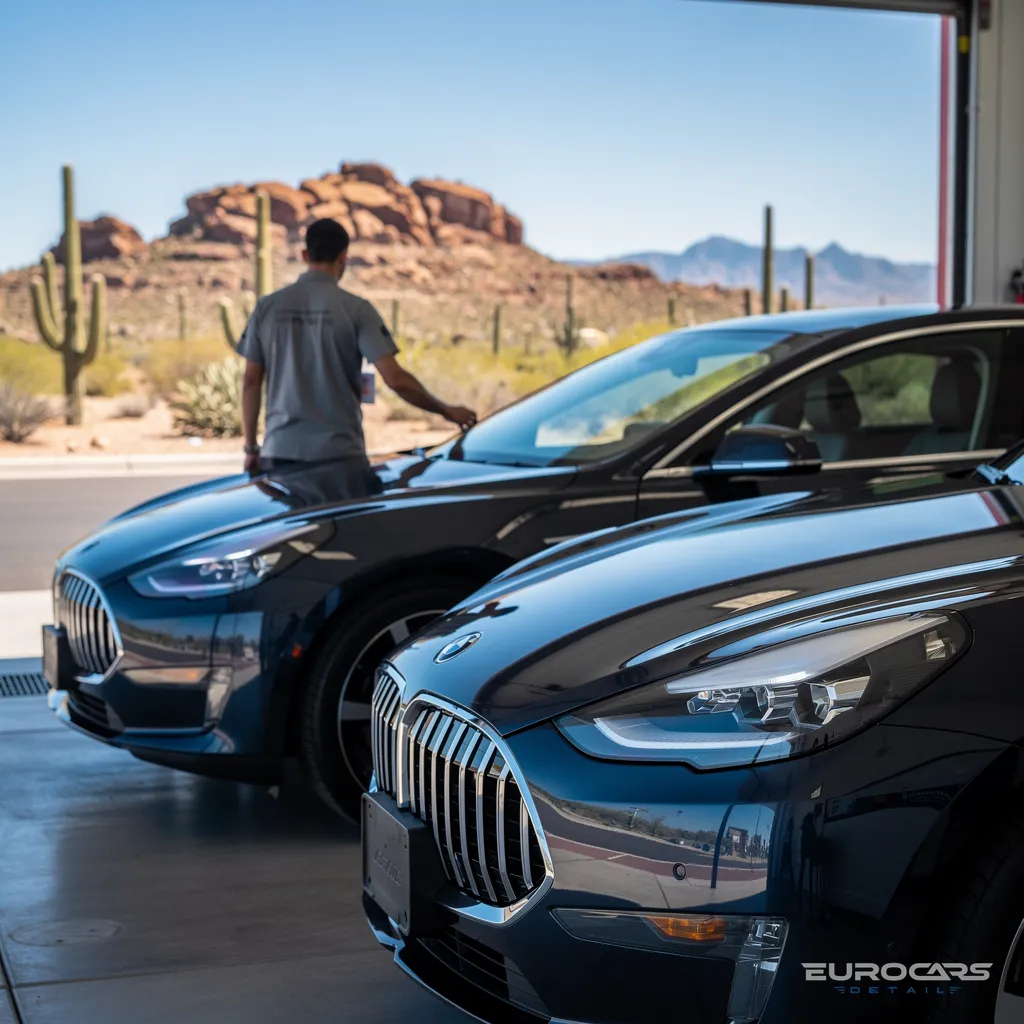
Arizona's intense UV exposure accelerates paint oxidation, fading, and clear-coat breakdown faster than milder climates. Paint protection film blocks harmful rays and resists yellowing, preserving factory finishes on vehicles throughout Arizona. EuroCars Detail installs self-healing PPF engineered for desert conditions, giving luxury cars and EVs lasting defense against sun damage and road debris.
Key Takeaways
- Arizona's intense UV exposure and heat create one of the harshest environments for vehicle paint degradation.
- EuroCars Detail installs premium PPF with precise fitment and maintains a 4.9 rating from 221 reviews.
- Professional paint protection film maintenance extends long-term protection for vehicles exposed to Arizona's brutal sun conditions.
Why Is Arizona's Sun So Hard on Paint?
Blue skies across Arizona create one of the harshest environments in the country for automotive paint. Relentless ultraviolet exposure combines with dust and road debris to break down a factory finish faster than most owners realize. Left unprotected, paint fades, oxidizes, and loses its depth within a few short seasons. That reality is exactly why paint protection film's performance against Arizona's harsh climate and weather conditions matters. Much for vehicles parked outdoors across the state.
Summer temperatures across Arizona regularly climb past 100 degrees, placing the state among the hottest in the entire United States. That extended heat punishes exterior surfaces and drives cabin temperatures to uncomfortable extremes. Clear coats soften under prolonged sun exposure, oxidation accelerates, and interior components take a beating right alongside the paint.
What Damages Arizona Vehicle Paint the Fastest?
Several stressors work together, not in isolation, to age a finish prematurely. The combination proves more destructive than any single factor alone.
- UV radiation – breaks down clear coat and fades pigment over time
- Dust and airborne grit – creates fine scratches during everyday driving
- Road debris – causes chips on hoods, mirrors, and bumpers
- Sustained summer heat – softens paint and speeds oxidation
Does Heat Alone Explain the Damage?
Heat is a major factor, but it rarely acts alone. UV rays, dust, and debris compound the punishment that triple-digit temperatures inflict on a vehicle's finish. Owners who address only one variable often see disappointing results, since Arizona's climate attacks paint from multiple directions at once.
How Does PPF Perform Against Arizona's Extreme Heat?
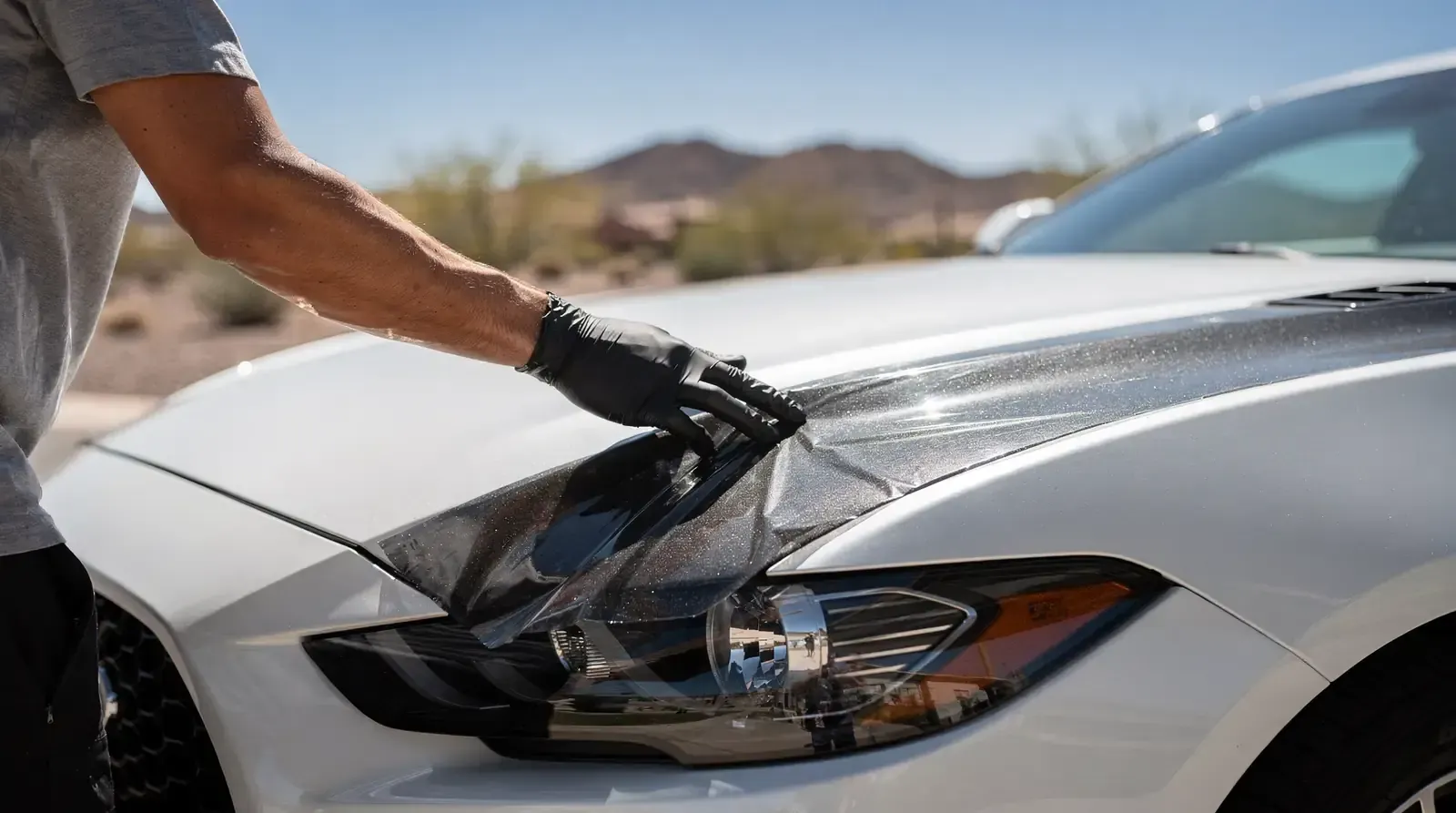
Desert heat above 100 degrees pushes every exterior surface to its limit. paint protection film answers with an advanced urethane construction engineered to absorb impact and resist fading. Vehicles across the state depend on that resilience daily. Owners throughout Arizona rely on film that holds its clarity season after season, not just for a single summer.
Applying protective film ranks among the most effective steps a vehicle owner takes to keep a car looking sharp. Running well under sustained desert temperatures. Arizona's climate does not offer much mercy. Asphalt radiates heat, sun exposure lasts most of the year, and paint finishes absorb the punishment without a protective layer.
How does Arizona's harsh climate and weather affect unprotected paint? Unprotected clear coat oxidizes faster under prolonged UV exposure, losing gloss and developing a chalky texture over time. Rock chips from highway debris compound the damage, creating entry points for further deterioration. Left unaddressed, these issues shorten a vehicle's cosmetic lifespan considerably.
Film acts as invisible armor across the front end, hood, and mirrors. The panels that take the brunt of Arizona's driving conditions. Coverage typically defends against:
- UV rays that fade and dull factory paint over time
- Rock chips kicked up on interstates and desert highways
- Bug splatter that etches into unprotected clear coat
- Sun-driven surface damage from year-round high-intensity exposure
What ongoing challenges does Arizona weather create for vehicles? UV damage and elevated interior temperatures remain persistent, year-round concerns for cars parked or driven throughout Arizona. These are not seasonal risks; they build cumulatively. A properly installed film layer intercepts that damage at the surface, preserving factory paint underneath rather than letting it absorb decades of desert exposure unprotected.
What PPF Options Do Arizona Drivers Have?
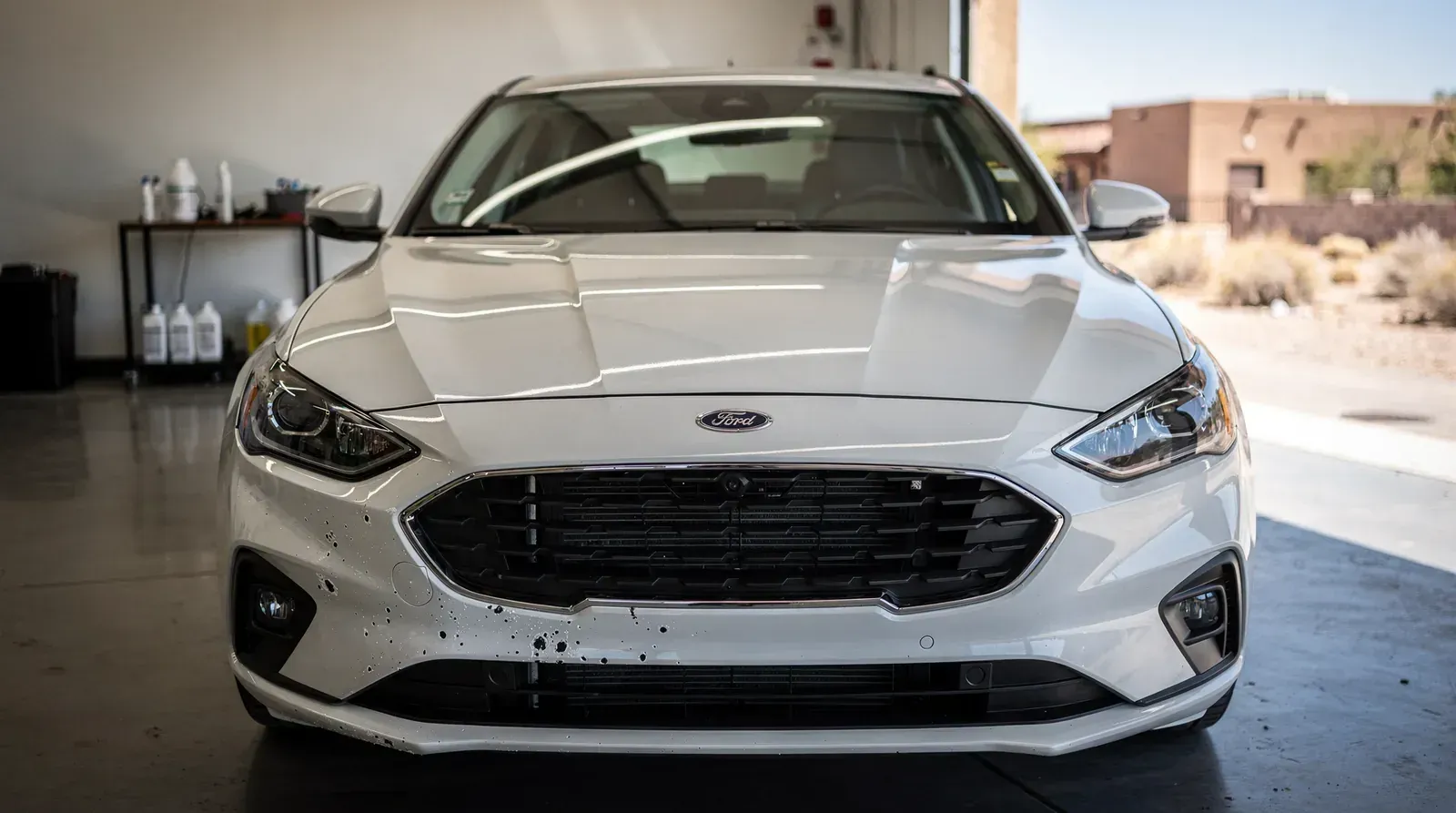
Arizona vehicle owners choose among several film tiers, brands, and finishes, each engineered to answer a specific desert challenge. Paint protection film performance against Arizona's harsh climate and weather conditions depends heavily on which product and installer a driver selects. Rock chips, road debris, and relentless UV exposure demand different levels of defense. Not every film delivers the same durability. The gap between a budget option and a premium system shows up fast on desert roads.
Is PPF the only protective film Arizona owners should consider?
No. Automotive film specialists typically apply a full range of protective films, not paint protection alone. This includes window tint and ceramic coating work performed in tandem with PPF for complete coverage.
Arizona drivers commonly compare these core protective film categories:
- Self-healing PPF film — a daily operational focus for many Arizona installers, valued for minor scratch recovery under sun exposure.
- Window tint films — paired with PPF to manage cabin heat and UV penetration.
- Ceramic coatings — layered over PPF for added gloss and chemical resistance.
Selecting the right combination protects both paint and resale value against Arizona's punishing sun.
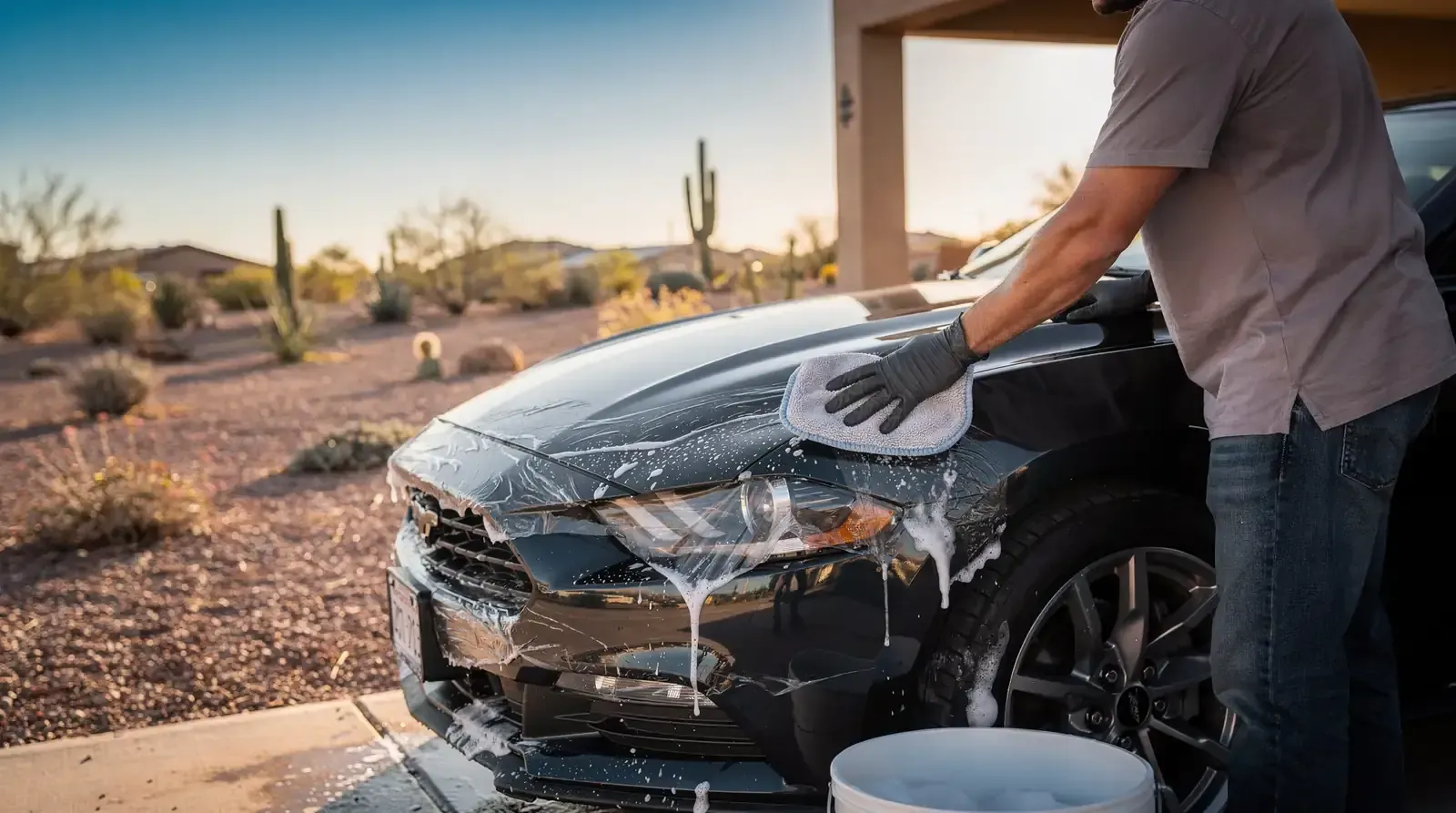
How Should You Maintain PPF in Arizona?
Proper maintenance of paint protection film in Arizona starts with choosing the right installation setting for the vehicle and lifestyle involved. Desert heat, dust storms, and intense UV exposure demand installation conditions that match the film's protective mission. Paint protection film performance against Arizona's harsh climate and weather conditions hinges as much on how the film goes on as on the film itself.
Two installation environments serve Arizona drivers, each suited to different needs:
- Mobile installation — arrives at a home or office, ideal for partial front-end packages and owners juggling tight schedules.
- In-shop installation — takes place in a climate-controlled facility, better suited for full vehicle wraps and complex, multi-panel jobs.
Does mobile PPF installation hold up as well as in-shop service?
Mobile service delivers the same professional-grade film application, just outside a traditional shop setting. For smaller jobs like partial front packages, convenience does not come at the cost of quality.
Why does a climate-controlled shop matter for full installations?
Full wraps and intricate installations benefit from tightly managed conditions. Temperature swings, airborne dust, and inconsistent lighting all threaten a clean bond between film and paint. A controlled shop environment keeps temperature, dust, and lighting steady, which supports cleaner results on every panel.
Long-term maintenance also depends on pairing PPF with complementary protection. Ceramic coating, window tinting, and paint correction packages performed at a fully-equipped Arizona facility work together to extend appearance and durability well beyond what film alone provides. For Arizona owners protecting luxury paint or EV finishes, that combined approach keeps vehicles shielded through every desert season.
Where Can Arizona Drivers Get PPF Installed?
Arizona vehicle owners find professional installation at EuroCars Detail, a Phoenix, AZ-based studio built to serve the entire state. Skipping a qualified installer risks bubbling, premature yellowing, and edges that elevator under triple-digit heat. Costly mistakes that undo the benefit of protection altogether. Understanding paint protection film performance against Arizona's harsh climate and weather conditions starts with choosing a shop equipped to handle desert-specific demands, not a generalist installer unfamiliar with UV load and dust abrasion.
Paint protection film ranks among the most critical safeguards for vehicle finishes exposed to Arizona's punishing sun, blowing sand, and highway debris. A properly fitted film shields clear coat from the exact stressors that dull paint fastest in this climate. Every coating, tint, PPF, and correction package moves through one fully-equipped Arizona facility, where controlled conditions support consistent, edge-to-edge results.
Does service require travel for owners statewide?
The studio's reach extends well beyond a single city. Owners regularly travel from Scottsdale, Paradise Valley, Glendale, Peoria, Tempe, Cave Creek, Chandler, and Gilbert for PPF, ceramic coatings, and correction work, with many Arizona communities represented among its regular clientele.
What makes this facility the right choice statewide?
The shop has built a reputation as Arizona's leader in PPF enhancement. Paint restoration, covering a broad mix of vehicles:
- Daily drivers and commuter cars
- Work trucks and fleet vehicles
- Sports cars and luxury EVs, including Tesla and Rivian
- Classics and powersports units like motorcycles, ATVs, and UTVs
That range of expertise gives Arizona owners one dependable destination for long-term protection.
Frequently Asked Questions
Why is Arizona's climate so damaging to vehicle paint?
Arizona combines intense, near year-round UV exposure with sustained triple-digit heat, dust, and road debris. Together these factors accelerate clear-coat oxidation, fading, and chip damage far faster than milder climates, which is why unprotected paint loses its depth and gloss within just a few seasons.
Does self-healing PPF actually work in extreme desert heat?
Yes. Self-healing film is engineered to recover from minor scratches and swirl marks when exposed to heat, including sun-driven warmth, making it particularly well suited to Arizona's climate where daily sun exposure helps the film's top layer reflow and heal on its own.
Is mobile PPF installation as reliable as in-shop service in Arizona?
Mobile installation delivers the same professional-grade application and is a great fit for partial front-end packages, but full vehicle wraps and complex, multi-panel jobs benefit from a climate-controlled shop, where steady temperature, dust, and lighting conditions support a cleaner bond between film and paint.
How can Arizona owners extend the life of their paint protection film?
Pairing PPF with ceramic coating, window tinting, and periodic paint correction at a fully-equipped facility extends appearance and durability well beyond what film alone provides. Routine care and choosing a qualified installer also help prevent bubbling, premature yellowing, and lifted edges under extreme heat.
Conclusion
Arizona's punishing sun, sustained heat, and road debris put unprotected paint at a real disadvantage, but the right film changes that equation. 3M, and SunTek paint protection film, properly installed and maintained, gives factory finishes a durable shield against UV fading, oxidation, and daily wear that this climate makes unavoidable. Pairing that film with ceramic coating, window tint, and periodic paint correction extends the payoff even further, keeping luxury cars, EVs, and daily drivers alike looking sharp through every desert season. For Phoenix and Scottsdale owners weighing their options, working with an experienced, desert-savvy installer like EuroCars Detail is the difference between protection that lasts and protection that fails when the heat is at its worst.
Quick Quote Form & Package Builder
GENERAL CONTACT FORM

CONNECT WITH US
PHONE: (602) 699-5358
EMAIL: info@eurocarsdetail.com
Hours of Operation
Monday-Friday: 9:00 AM - 6:00 PM
Saturday-Sunday: By Appointment Only
Social Media
Cars, trucks, and SUVs cannot be neglected. Their overall value and function in your life must be protected, perfected, and maintained at all costs. Here at EuroCars Detail, our business is distinctly rooted in these efforts, providing all drivers of any make, model, and year vehicle with an IDA-certified automotive detailing experience!
We have a professional team of ceramic coating specialists, paint protection film installation experts, window tinting applicators, and paint correction artists, all certified in the many XPEL products that are designed to keep contamination, UV rays, and more from all aspects of your vehicle. Outside of the Phoenix, Arizona area, we also serve those who drive in Scottsdale, Paradise Valley, Glendale, Peoria, Tempe, Cave Creek, Chandler, and Gilbert, Arizona.
With the rise of different electric vehicles that now populate the streets of our service areas, we at EuroCars Detail have perfected the art of correcting and protecting Rivian and Tesla finish, ensuring that their specific type of paint not only looks its best, but is handled with care. Whatever make and model you drive, please connect with our professional automotive detailers and get your FREE quote right away!